Is Johnn Swindal Owner of Masonry Arts in Bessemer Alabama Still Living?
In our sixth GEN NXT interview, I had the opportunity to chat with John Swindal of Masonry Arts and the newly started Swindal Group. It was such a pleasure to acquire more than most him, his story and background in the manufacture. I'd like to give thanks him for taking the time to speak with me on my very first GEN NXT interview. Nosotros also give thanks JagClamp for continuing to sponsor this important series.
Bronzella Cleveland: Allow's start out with a fiddling bit about your background and how yous got into the industry.
John Swindal: My peachy grandfather started out in the industry, his name was John Victor Swindal and he was a brick mason in Alabama years and years agone. Well-nigh 65 years agone my gramps started his starting time masonry business called John Swindal Masonry. Then my father followed in his footsteps and founded Masonry Arts in 1979, and so grandpa and male parent worked together in Masonry Arts until my grandfather retired. Which was most 10 years ago, so they worked together at Masonry Arts for xxx years. I became involved in Masonry Arts initially every bit the laborer, so every bit an apprentice brick mason, then a project manager/estimator, all the fashion through from the ground upwards so to speak with Masonry Arts.
I started working in the summers when I was 14, I wasn't supposed to exist, only I was definitely working when I was 14. Accounts payable to accounts receivable, and and so equally presently as they thought I could get away with it, they put me a chore site. I worked in the field every summer and break until I finished college. When I finished college I went to work for Masonry Arts full time, I was involved in the Drinking glass and Glazing Division the company has for well-nigh 2 years. And then I went to constabulary schoolhouse and business school at a local university in Birmingham, AL. I spent iii years to get my law degree and MBA. When I finished in 2007, I went back to work fulltime at Masonry Arts until belatedly 2014. At that fourth dimension my father and I were running a stone quarrying and stone manufacturing business for an international investor. So I was working for both Masonry Arts and the Alabama Mineral Mining Company, I worked for them for nearly two and a one-half years.
So recently I started my own company, chosen the Swindal Group. I'm still with Masonry Arts, merely I started a consulting business firm to consult with business concern plan creation and revision, contract placing and negotiation, risk mitigation, adventure identification. Basically anything that involves risk on the front end end of a job or the middle or end of a job. Litigation abstention and strategy, document review, and also general business organization planning, there isn't a whole lot of assist given to the specialty contractors. My dad is helping me along. Nosotros're besides going to do some investigations that are associated with litigations, construction defect investigations and advice, constructability assessments, just a wide diversity of services for stonemason and stone installation contractors.
B.C.: What are some of your earliest memories working with your family unit?
J.S.: I used to become with my gramps on the weekends, nosotros'd drive down to the office and I'd spent hours wandering around the equipment grand. Climbing into Pettibones, lulls, forklifts, and playing around with scaffold bucks— nothing dangerous you know. But I spent a lot of fourth dimension on the weekends wandering around the equipment yard. He'd also take me effectually on Saturday and Sunday if there wasn't anything going on, and if Masonry Arts had any jobs going on, I'd go to jobsites with him. Yous know in the difficult hats, I'd walk around and talk to the foreman. I was doing that since I was out of a machine seat. Somewhen I started doing that with my dad until I was able to become in and start working.
B.C.: You mentioned you lot started working when you were fourteen, were you ever given a difficult time by the other guys on jobsites?
J.Southward.: Well, I was originally. I learned at a very young age that when you are the dominate' son/grandson, the best way to earn respect is to show up early and to stay late and most importantly to ask questions. I never pretended like I knew everything, I always knew that the of import thing is to ask questions. Peculiarly when you lot're 15/xvi years former and don't know how to do things, the best affair is to use the wisdom and knowledge of those effectually yous. So I was never hesitant to enquire questions, I ate dejeuner with the guys, I spent as much fourth dimension every bit I could with the guys— before, during and after piece of work. In most instances you can learn from a laborer who'south shaking out rock, mixing mortar, organizing the job, than you tin can from the foremen who is running the job. It's of import to sort of systematically go through and enquire everybody, not what they're doing, simply why y'all're doing it— that'southward the best manner to larn and earn their respect. Not that I didn't get a hard fourth dimension occasionally, because I did, just instead of getting defensive near it I decided to have it in stride. And laugh with the guys rather than hide or tuck my tail and go tell on them.
B.C.: So lets jump ahead, how did you lot get to where y'all are today?
J.S.: Without Masonry Arts and the masonry manufacture I wouldn't have been able to go to college, law school and business organization school. It's a combination of the educational activity and the experience I've had working with my father. When I was 27 and correct out of law school the Vice President of Operations for Masonry Arts left to take another job. So I was thrust into a very important position at a very immature age. I once more was forced to start asking questions to people who knew a lot more almost the business than I did. So I understood [luckily] that at that place are people that work for my father so and work for my father now, anybody has strengths and weaknesses. I attempted to have the good points from everybody that I was working with, including my father and sort of weeding out some of the bad characteristics some of them had. Whether it was estimating, or project managing, or operations, and try use everybody'southward strengths and really turning into the person who I am today. It'south a combination of education and beingness thrust into a direction position at an early age. Working with Masonry Arts has provided a unique opportunity for me to acquire.
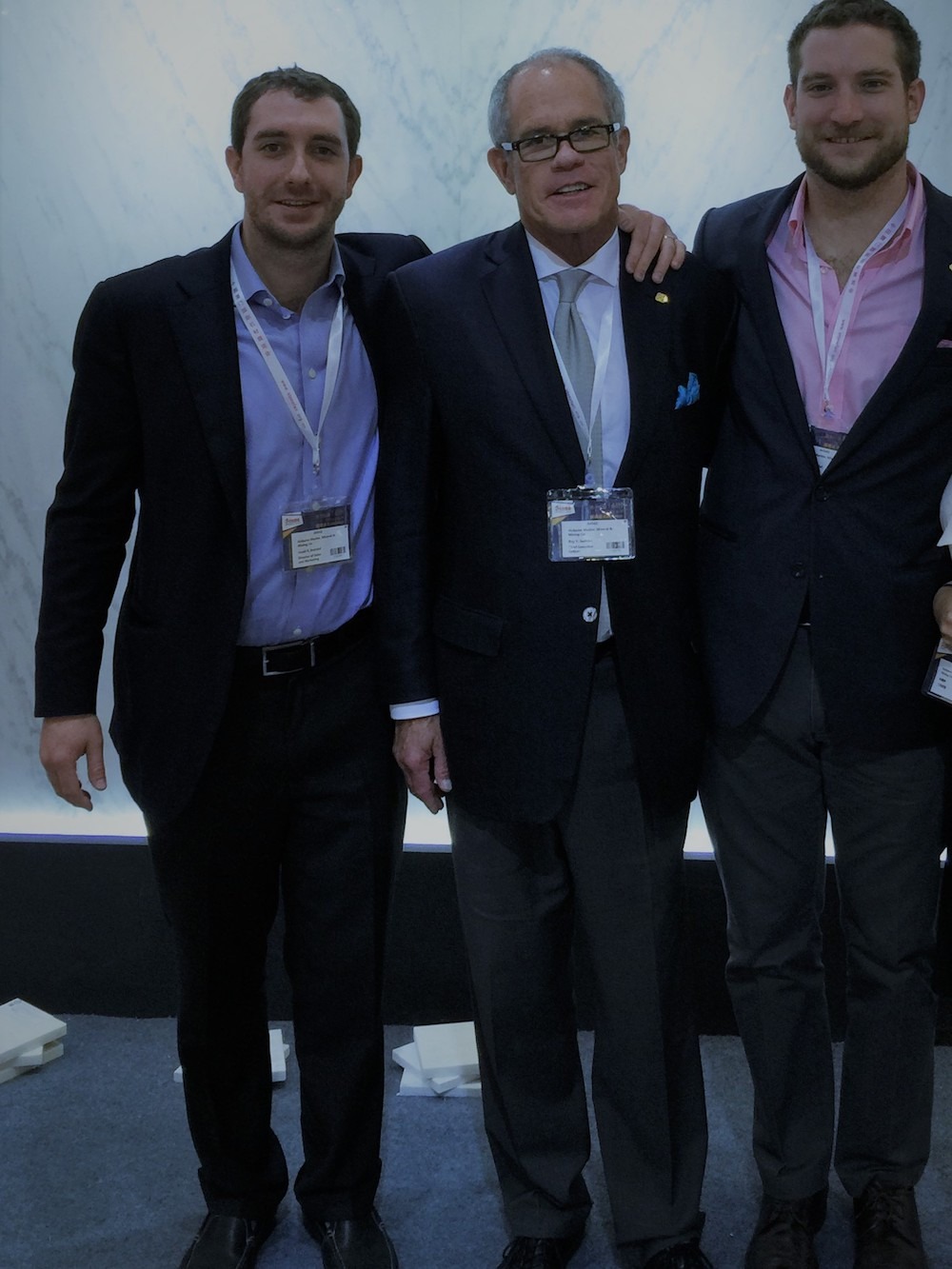
B.C.: You're unique in this manufacture; y'all have your MBA and a constabulary caste. How do you necktie those degrees into working in the industry?
J.S.: I think in the manufacture it'south unusual to have an attorney on staff. Masonry Arts is lucky to have and chaser on staff, I don't know if it's lucky that it's me. I would call up my father would tell you information technology's been really advantageous, I apply both my police degree and my MBA almost daily. Whether it is at Masonry Arts or in my own business, which I'm getting off the basis. Only with Masonry Arts, whether it's reviewing a contract, advising a projection managing director on how to deal with a potential conflict. Or even advising a foreman of a potential conflict, or general superintendent, it'due south been very useful. Not to say that I'm filing lawsuits because I'm not, I'm not a litigator, I just practise transactional work but, I think it's useful to go along united states out of trouble. I don't know how many times I've gone to ASA conferences or fifty-fifty MCAA conferences. A lawyer is ever going to tell you the best contract is the one you don't sign. All of us who have been in the business organisation know y'all take to sign contracts y'all don't want to, because yous have to pay your bills.
I think that's one of import thing we demand to do, we have to sign contracts without a full general contractor agreeing to, or having suggested changes. It'due south a lot easier to manage your contract if you understand information technology when you lot accept to sign one. I call back my legal educational activity has really helped u.s. to protect ourselves in those instances when you have to sign a contract just to pay the bills, which is something that y'all volition take to do.
B.C.: What interests you virtually the industry?
J.Due south.: I've been in the industry since I was a kid, at some point in loftier school and even college, I could call back maxim the one thing I didn't want to do is go back to Alabama and be involved in the masonry manufacture. That's part of the reason why I went and then far away to college, just part of what notwithstanding attracted me to the industry at the stop of the mean solar day at that place'due south a physical manifestation of your work. When yous go out a jobsite you tin meet y'all've laid 1,000 brick in a day or you've laid 200 blocks in a solar day. Everyday when you leave your job there's a physical manifestation of what yous've accomplished. That's very unusual because typically with a lawyer, there'due south no physical manifestation of the piece of work they've put in, unless it's dollars. But for a bricklayer contractor or any specialty subcontractor, information technology'south important and bang-up to come across what's been accomplished. You can drive anywhere in Birmingham, Alabama or further on the Southeast of the U.s.a. and see the work Masonry Arts has built over the grade of the last 40 years. With my grandfather going back 30 years, which is cool.
The industry needs organizations like the MCAA going forward in that location are so many big picture show issues like the silica issue, contractual issues, pay causes, damages for delay causes. This is where typically general contractors and owners seem to have a lot more lobbying powers and in some states information technology is very difficult for subcontractors to exist able to have a fair competitive landscape without training issues. Nosotros're having existent training issues hither in Alabama correct now, nosotros only don't have a grooming course and I know that owned in the industry. I don't know how to solve the trouble, but I know organizations similar the MCAA can put plenty smart people in a room together and if they stay together for an extended menstruum of time we can at least move forward and start diagnosing information technology.
B.C.: How is it working with your family unit?
J.S.: There have definitely been some rocky periods, simply overwhelmingly it's been very positive. We don't always concord just we respectively disagree, there's never any statement that lasts while the argument is ongoing. I feel that we do a really good job compartmentalizing work and family time and we've gotten better at that as we've gotten older. We endeavour not to take piece of work issues home and at present it's getting easier at present, I'm notwithstanding very much involved with Masonry Arts, but I'm getting the Swindal Group started. And then at present when I talk to my dad, more than one-half of information technology is work related, but a good scrap is family unit related, because I moved upwardly to Rhode Island with my family. My dad is still in Alabama, so he'southward sort of my lifeline to our family unit there. I retrieve because nosotros've gotten older we can compartmentalize ameliorate, only nosotros always could. I think it was mostly because of my grandfather. He was a at-home and reasonable person, not that my dad isn't, they but have very unlike leadership and management styles. Early on in my career he was able to human action as a mediator for my father and I, and so we were able to really work well together. We have dissimilar strengths and weaknesses, and nosotros wait at problems and solutions differently, because of that we've been able to work together.
B.C.: Accept you worked with younger people at your company? How take those experiences been?
J.S.: I've constitute that younger people are either 100% defended and committed without question or they are interested in only themselves. There's no in between with younger people, I feel they're either all in, ready to become their feet wet. Or in that location's an entitlement there, as if they feel they don't need to go to the jobsite. I think the biggest challenge with the younger generation is their reluctance to selection up a telephone or arrive their car and actually go and talk to a client. Whether it's the full general contractor or a project manager wanting to talk to the foreman. A lot of times now nigh of our foremen become a lot emails and they're non great at e-mail correspondence, but they are replying to them. The younger generation volition just use it as a crutch, they get attached to their email and some times you take to use email. Granted given my position, I empathize that there is a time and place to email. But there'south also still a time and a place for personal contact through a phone call or most importantly through face-to-face contact. I feel like that's been lost.
B.C.: Aye, we are in a digital historic period.
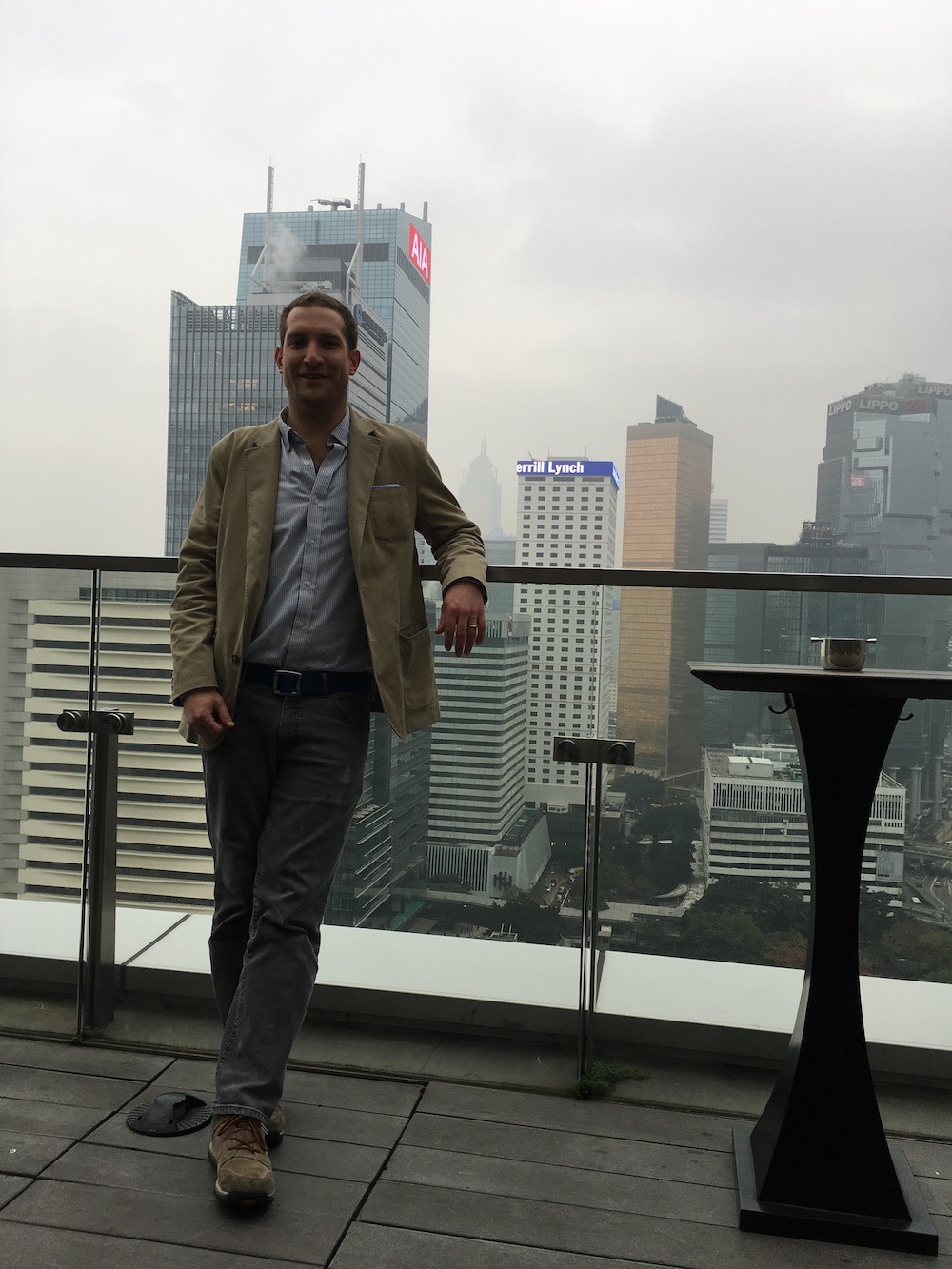
J.S.: Yeah, I mean I take hold of myself also; it's much easier to just ship an email or text bulletin, because y'all do information technology on your own time. It'southward a five-minute exercise or a five 2nd exercise, rather than a 20-infinitesimal conversation. It's necessary to actively go back and forth with somebody on the telephone or face up-to-confront, information technology'south really the only way to hash out problems. It's unusual if non impossible to solve a problem with diverse problems in an email or a text message, and the younger generation doesn't seem to accept it. Considering I don't call back they're lazy, I don't retrieve they're any lazier than whatever other generation that came before them. I just recall it'southward much easier to rely on technology.
B.C.: Lets talk about how you got involved with the MCAA and the benefits you've seen from existence involved.
J.S.: Golly, I started going to MCAA conventions when I was able to walk. I think John Swindal Masonry was in the MCAA. I mean my family unit being involved in the MCAA goes back a long manner, and equally I got older I got much more involved. When I started worked for AM3 (Alabama Mining and Mineral Company) I didn't have as much time to dedicate to Masonry Arts or the MCAA. Simply I guess information technology was 10 years ago I went to one of the legislative conferences in Washington, which I call back those things are very important. I'm a business firm believer that merchandise organizations like the MCAA are very important to band together for important causes and interests, and too to get a practiced sense of what's going on in other parts of the land. Whether it's training or composition of labor force, even legislation is changing. Fifty-fifty though Masonry Arts is based in Alabama and I live in Rhode Island, legislative changes in Rhode Isle or Alabama tin eventually reach the other country and any other part of the country. Sometimes at that place are parts of the country that are on the cut edge of technology or legislation that other people tin learn from and the simply way to actually acquire from other people to is be apart of an organization like MCAA. It gives you access to people from all across the land, large contractors, minor contractors, a sampling of anyone and everyone, and information technology's important to larn from anybody and to be able to teach others.
B.C.: Practise you accept any advice for people who are interested in the industry?
J.South.: It's very of import to spend some time in all aspects of the manufacture that you lot can. I realize I was in a unique position as the "dominate' son" just if you're going to go involved in the masonry manufacture particularly, I've learned yous should go out in the field and when you lot're in the field talk to everybody. Talk to your laborer, talk to your equipment operators, the bricklayers, talk to the foreman, and then spend fourth dimension in the office. Spend fourth dimension with the administrative staff, and accounts receivable and payable, non jut the estimators and projection managers. Spend time with everybody you possibly can and acquire as much as you tin can, don't put yourself in a silo where y'all're but a field guy or just an office guy or lady. I would say the more exposure you go in an entire organization the better off you'll be.
Words: Bronzella Cleveland
Photos: John Swindal
hottingerhishmithad.blogspot.com
Source: https://www.masonrymagazine.com/blog/2017/11/01/gen-nxt-john-swindal/
0 Response to "Is Johnn Swindal Owner of Masonry Arts in Bessemer Alabama Still Living?"
Post a Comment